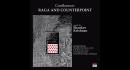
Musician blends Carnatic and Western in new album
Born into a family that breathes Carnatic music, the melodious cadences of ragas seeped into USA-based Indian-American composer Shanker Krishnans system quite early in life. His guru, Brindamma, left an indelible impact on him, and his inclination towards Western classical music added even more layers of potential to his field of experimentation. He says, Brindammas music was a major influence on me, with the subtle gamakas and jewel-box intricacy of her style. It was when he went to Berkeley for graduate study in applied mathematics that he first encountered Western classical music. I was captivated by the music of JS Bach, with its lines layered vertically over one another in counterpoint. From the beginning, I wondered what would happen if the intricacy of raga met the intricacy of counterpoint, Shanker says. After years of learning and experimentation, the seeds of his debut album Confluence: Raga and Counterpoint were sown. It was released in September by IndianRaga and co-produced by Geetha Raja, a prominent musician, and his sister. The long duration of creating this masterpiece reflects how each formation was chiselled to perfection. The intention was to draw musical contours to his emotions. My aim was to bring together the architecture of Baroque counterpoint with the emotional impact of the ragas and gamakas of Carnatic melodic lines and to integrate them at the deepest level, he says. Blending in the Gita For Shanker, the purpose of music is expression and reflection, and the structure is how the emotion unfolds. In this album, the Fugue-Kriti traces an emotional arc from tranquillity to foreboding, and Field of Dharma explores the emotional landscape of the Bhagavad Gita , he says. Shankers inclination towards the philosophies and teachings of the Gita, and the emotional perplexities Arjuna encounters at each point of time during the Kurukshetra war, exude in the album. He believes that Arjunas dilemma and the lessons of the Gita are both timeless and timely. The themes used in the album have a universal appeal. The Gita remains very relevant in todays world. In moments of stress and anxiety, I still turn to its teaching of nishkama karma non-attachment to the fruits of ones actions, he says. Ragas , too, are a way of conveying the innate emotions that sway between the performer and the audience. He has used ragas like Shanmukhapriya and Charukesi for the Field of Dharma because both have a high level of emotional intensity yet can convey multiple moods. In the Fugue-Kriti , a shift from raga Hemavathi to Vachaspathi involves only the change in the gandharam , but the resulting change in mood is substantial from contemplation to luminosity and uplift. The modulations in emotions and moods were also brought through the changes in instrumentation and harmonic progressions. The album features instruments like violin, veena, venu, mridangam, cello, harp, trumpet, and oboe. Quite diverse in their functionality, these Western and Indian instruments meld into each other as effortlessly as a flowing river. Shanker believes that despite the deemed differences between the instruments created by the geography and other evolutionary differences, they share secrets in the quietest ways. These instruments can speak to each other more naturally than we assume, he adds. Instrumental integration Orchestrating the instruments was another way of articulating the rising and falling emotions. In the Field of Dharma , the plucked notes and resonance of the harp echo those of the veena, and the lines of the oboe and solo trumpet intertwine with the Carnatic violin and veena. By varying the instruments, I could shift the emotional register brass creating a more martial atmosphere, and the delicacy of the harp for Arjunas introspection. He expresses his gratitude towards the Carnatic soloists Shraddha Ravindran (violin), R Thiagarajan (flute), KR Shrievats (veena) and Mannarkoil J Balaji (mridangam), who defined the synchronization of the notes with depth and intricacies. After pursuing a career in poverty reduction at the World Bank for 25 years, he steered his path to follow his heart. An expert in traditional music and a passionate Western music enthusiast, he closely studied composers like Debussy and Bartk, and has been influenced by other forms of music, even rock. Confluence: Raga and Counterpoint is an offshoot of his deep exploration in the ocean of music, both traditional and Western. The album, consisting of two multi-movement pieces, is available on Apple Music Classical, Spotify, and on Shankers and IndianRagas YouTube channels.

 22 C
22 C