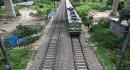
89% of tracks in South Western Railway electrified; Bengaluru division completes 99%
BENGALURU: Following a recent statement from the Indian Railways highlighting the near completion (99%) of electrification across Indias broad-gauge network, the South Western Railway (SWR) has said that it has electrified nearly 89% of its railway network. The Bengaluru Division has achieved over 99% completion. This marks a significant milestone in SWRs push for cleaner and more energy-efficient train operations. Of the total 3,721.689 route kilometres (RKM), including newly commissioned routes, 3,305 RKM has already been electrified. According to official data, electrification work is currently pending on a few key sections. These include the CaranzolSonalium stretch (8.148 RKM) and the DonigalShiribagilu section (32 RKM), which are scheduled for completion by January 2026. Another major pending stretch is the AmaravathiVyasa Colony section, spanning 120 RKM, where civil and electrical works are progressing at different stages. While foundation work has been completed 91%, mast erection stands at 69% and wiring work has reached 17%. The railway authorities said electrification will be taken up at a later stage on several newly sanctioned railway lines. These include the GinigeraSindhanur section (84.61 RKM), TalkalLinganbandi (45.55 RKM), BagalkotKudachi (30 RKM) and RayadurgaDoddahalli (81.72 RKM). As these lines are still under development, electrification will be planned once construction reaches an advanced stage. Division-wise data shows that the Bengaluru division (SBC) is almost fully electrified, with 1,144.049 RKM electrified out of a total 1,144.984 RKM. The Mysuru division has electrified 1,054.7345 RKM out of 1,141.787 RKM, while the Hubballi division has electrified 1,106.25 RKM of its total 1,434.918 RKM network. Railway officials said the transition has reduced diesel consumption, cut emissions, lowered operational costs and improved the efficiency of train operations. While several advanced economies continue to rely heavily on diesel traction due to cost or structural constraints, Indian Railways has made rapid progress through sustained planning and consistent execution.

 16 C
16 C