SENSEX
NIFTY
GOLD
USD/INR

Weather

image 25    C

World News

Yahoo

World / Yahoo

details

Autumnal equinox marks the start of fall, but heat could stick around

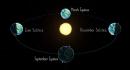
Our long, hot summer is finally coming to an end this eveningwith the autumnalequinox, which marks the beginning of fall here in the Northern Hemisphere. At a precise moment each September, usually on the 22nd or 23rd, the sun is directly above the equator, marking the autumnal equinox in the Northern Hemisphere. (South of the equator in the Southern Hemisphere, it's known as the vernal or spring equinox and marks the beginning of spring.) But what weather will the U.S. see this fall, given the record hot August and a forecast that calls for El Nio to peak either in late fall or early winter? Read on for the forecast and also a look back at some of the statistics that made the three-month summer so remarkable. What time is the autumnal equinox? The exact time of the equinox is8:05 p.m. ET. The equinox occurs at the same moment worldwide. The word equinox comes from the Latin words aequalis and nox, meaning equal night. On the autumnal (and the spring) equinox, day and night are both roughly 12 hours long in most of the world. This will be true Sept. 22 from as far north as Utqiagvik (formerly Barrow), Alaska north of the Arctic Circle to as far south as Wellington, New Zealand, the world's southernmost capital city. Day and night aren't exactly 12 hours long on the day of the equinox because the Earth's atmosphere refracts, or bends, light in an optical illusion that brings more daylight than there really is. Because of this, the date when day and night are of equal length is usually a few days after the autumnal equinox. Astronomical fall vs. meteorological fall Although some people say the autumnal equinox is the official start of fall, no administrative or political organization actually designates that. In fact, though astronomers say summer ends Sept. 22, meteorologists and climatologists say summer ended Aug. 31, the final day of the three hottest months of the year (June, July and August). Cooler temperatures? Maybe, but warmer than normal If you were looking forward to cooler temperatures this fall , you might be disappointed. Thanks to a combination of El Nio and climate change , theres a high likelihood for warmer than normal temperatures to continue this fall, said Zach Labe, climate scientist at Climate Central. The summer that is just ending was one for the record books, with record ocean heat, the warmest month recorded globally, Labe said. And extremes like these could be just the beginning. Worldwide, August was the warmest on record for land and ocean temperatures combined and the August average in the U.S. set records in terms of maximum, average and minimum temperatures, Labe said. El Nio is all about redistributing heat, so the heat comes from the ocean and is transferred into the atmosphere, Labe said. Thats why El Nio years often add an additional boost to global temperatures. Through August, the average temperature in 2026 has been the warmest on record in the contiguous United States, and Arizona, California, Colorado, Montana, Nevada, New Mexico, Oklahoma, Texas, Utah and Wyoming each had their warmest start to the calendar year on record, he said. Even though were likely to hear more and more about warm temperature records being broken, its not really El Nio that is breaking those records, Labe said. It's human-caused climate change. That's what's driving the long-term trend. Federal forecasters expect El Nio to peak later this fall and to be one of the strongest El Nio events on record, but that doesn't always necessarily mean stronger impacts, Labe said. Every El Nio has its own flavor. Each one is different. And so that's really important to keep in mind. Doyle Rice and Dinah Voyles Pulver are national correspondents for USA TODAY focusing on weather and climate. Reach them at drice@usatoday.com and dpulver@usatoday.com. This article originally appeared on USA TODAY: Autumnal equinox marks start of fall, but heat could stick around This article originally appeared on USA TODAY at https://www.usatoday.com/story/news/weather/2026/09/22/when-is-autumnal-equinox-fall-begins/91810272007/

22 Sep 2026 3:34 pm