SENSEX
NIFTY
GOLD
USD/INR

Weather

image 35    C

Mangalore News

Ubergizmo

Mangalore / Ubergizmo

details

MilliTrack AMR+ Help Robots Navigate Where Cameras And LiDAR Fail

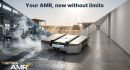
Autonomous mobile robots (AMRs) increasingly move materials around factories and warehouses, but most still rely heavily on cameras and LiDAR to understand where they are. Those systems can struggle in environments filled with dust, fog, excessive light, or long rows of nearly identical shelves. These are not rare occurrences at industrial locations. South Korean startup MilliTrack wants to address those blind spots with AMR+ , an add-on localization system that uses millimeter-wave radio signals instead of relying solely on what the robot can see. Rather than replacing an AMRs existing navigation system, AMR+ supplements it. A tracker is installed on the robot, while small tags can be placed in areas where the robots normal SLAM localization becomes unreliable. SLAM is a technology that lets a robot build a map of its surroundings while simultaneously figuring out where it is on that map. The system can then provide the AMR with another, better, source for its position. MilliTrack claims 3 cm localization accuracy at distances up to 30 meters , with latency below 100 milliseconds. Importantly, AMR+ does not require the robot to abandon its existing LiDAR, cameras, or inertial sensors. During our conversation with MilliTrack CEO Song Min Kim , he explained that an AMR can monitor the confidence level of its normal SLAM localization and switch to coordinates provided by AMR+ when that confidence drops. The reverse is also possible. MilliTracks system requires line of sight between the tracker and a tag. If that connection disappears, the robot can fall back on its existing localization technologies. This makes AMR+ an additional localization layer rather than a replacement for the navigation hardware already installed on the robot. The tags work somewhat like long-range RFID devices. Instead of continuously transmitting a radio signal, they reflect a millimeter-wave signal sent by the tracker using a technique called backscatter . This dramatically reduces their power requirements. MilliTrack says its AMR+ tags can operate for up to 20 years on a battery and require no power or network cabling. That could make deployment relatively simple: identify areas where an AMR has localization problems and install tags only where they are needed. The tags can also be moved as factory layouts or operating conditions change. Another interesting feature is self-calibration . Traditional real-time location systems can require installers to precisely measure the position of fixed reference points. MilliTracks technology allows its devices to measure their relative positions automatically. In a demonstration shown during our briefing, the calibration process took about 60 seconds . Advanced Research Behind The Startup MilliTrack was founded in 2024 by Song Min Kim, who is also an associate professor of electrical engineering at KAIST , one of South Koreas leading technology universities. The commercial product is based on years of localization research conducted by Kim and his team, including MilliTrack CTO Kang Min Bae . Based on the published research we reviewed, the technical foundation appears unusually strong for an early-stage startup. In one peer-reviewed project called Hawkeye , the researchers demonstrated sub-centimeter millimeter-wave backscatter localization over very long distances, reporting approximately 7 mm median accuracy at a distance of 160 meters in prototype testing. AMR+ uses a considerably more conservative commercial specification of 3 cm at 30 meters, but the earlier research provides useful context for the technology behind the product. MilliTrack says its localization technology has already been used in more than 30 deployments and ongoing proof-of-concept projects, primarily in Korean industrial environments. Around $1,000 To Upgrade An Existing AMR AMR+ is scheduled to launch in March 2027 . Final pricing has not been announced, but Song told us that MilliTrack currently expects a package containing one tracker and one tag to cost around $1,000 , while additional tags could cost approximately $200 each , just to indulge us with a ballpark estimate. That pricing model is important because an entire factory would not necessarily need to be covered. A company could initially install AMR+ only in locations where its robots have trouble navigating and expand the system later if necessary. For industrial robots, localization does not need to depend on a single technology. Cameras and LiDAR work extremely well in many environments, while radio localization has different strengths and limitations. MilliTracks approach is interesting because it does not attempt to replace what already works. Instead, AMR+ is designed to give existing robots another way to know exactly where they are when their usual sensors become unreliable. MilliTrack plans to showcase its technology at CES 2027, ahead of the planned AMR+ launch in March 2027. MilliTrack AMR+ Help Robots Navigate Where Cameras And LiDAR Fail , original content from Ubergizmo . Read our Copyrights and terms of use .

20 Sep 2026 4:50 am