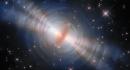
Hubble showcases the Egg Nebula in all its dying-star glory
Hubble may no longer be the gold standard , but it can still capture some impressive images. The telescope's latest snapshot is our clearest view yet of the Egg Nebula. Roughly 3,000 light-years away from Earth, the nebula's name is derived from its dense layer of gas and dust cloaking a central star. The new image shows the nebula's four beams of starlight (from that central star) escaping from its gas-and-dust shell. On either side of the disc-like cloud are fast-moving outflows of hot molecular hydrogen. The orange highlights in this image indicate the glow of infrared light. As the beams of starlight stretch out from the center, they illuminate concentric rings of gas. The gass ripple-like pattern suggests it was created by successive bursts from the star, with a little more ejecting every few hundred years. Hubble image of the Egg Nebula. A disc of gas and dust surrounded by beams of light and concentric rings of dust. SA / Hubble & NASA, B. Balick (University of Washington) The Egg Nebula, found in the constellation Cygnus, was first discovered in 1975. Nebulae in this preplanetary phase are rare finds. Since the stage only lasts a few thousand years (and because they're often faint), they're relatively difficult for astronomers to spot. By comparing this new image with previous Hubble snapshots of the Egg Nebula, astronomers can learn more about it and shed more light on its processes. But for the rest of us, it makes for some pretty sweet eye candy, right? This article originally appeared on Engadget at https://www.engadget.com/science/space/hubble-showcases-the-egg-nebula-in-all-its-dying-star-glory-174239769.html?src=rss

 22 C
22 C