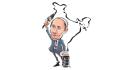
Vladimir Putin: The tsar who thrives in chaos
One popular anecdote about Vladimir Vladimirovich Putin oft-repeated by Russia-obsessed foreign commentators trying to analyse the mindset of the enigmatic leader is about a cornered rat. The story, narrated as saying by Putin himself in the book First Person: An Astonishingly Frank Self-Portrait by Russias President, illustrates how a young Putin once tried to drive away a big rat at his Leningrad apartment. With a stick in hand, he chased the rodent into a corner. But the playful hunt turned ugly as the rat, nowhere to go but back, suddenly leapt at its tormentor. Now, it was the turn of the young boy, then a lean lad with weak physique, to run for his life. The childhood incident apparently taught Putin a life-long lesson about the ferocity of something, or someone, cornered. In the current context where Putin, now 73, leaves no impression that he is in a hurry to end the Russia-Ukraine war despite the Western sanctions to isolate Moscow, the debate among commentators is whether he does what he does because he feels cornered or hes trying to corner the West. Putins just-concluded visit to India for the annual India-Russia summit, which saw Prime Minister Narendra Modi break diplomatic protocol to go to the airport to receive him, gives some clues. The optics of the Putin-Modi handshake and hug spoke louder than words, conveying the message that the Russian president does have steadfast friends in his corner. The transition from a boy whose pastime was to chase away rodents to becoming one of the worlds most powerful leaders would appear dramatic but that may not be the case. Born on October 7, 1952, he grew up in the ruins of Leningrad (now St Petersburg), which endured a brutal 900-day siege during the Second World War. Putin had a very difficult childhood; his father was away fighting the war while his mother almost died of starvation. His neighbourhood in the war-torn city was infested with insects and rats. He was lean, short and was reportedly bullied, which inspired him to learn judo for self-defence. After school, he went on to study law at Leningrad State University and later did another course on economics. From his early childhood, he aspired to a career in intelligence and the university degrees earned him a job at KGB. After training, he was sent to Dresden in East Germany in 1985. There, he honed his German language skills. However, his job was not as glamorous as he imagined as his duty was limited to liaisoning between the KGB headquarters in Moscow and the Stasi, the intelligence service of East Germany. Though he did not get a field agent role, his job involved constantly interacting with people, which shaped his introvert personality. But things changed in 1989 as revolutions toppled many foreign governments with ties to the USSR, which would also disintegrate later. Putin returned to St Petersburg and managed to find a job in the mayors office, where he rose to the rank of deputy mayor. His next stop was Moscow, where he is said to have networked his way into then president Boris Yeltsins inner circle. Leveraging his new connections, Putin managed to land an influential job as head of the Federal Security Service in 1998. There was no looking back for him since then. A year later, he was named the deputy prime minister and then acting prime minister. The jaw-dropping moment came soon when Yeltsin abruptly resigned and handed over power to Putin, naming him acting president. Putin was officially elected president in March 2000 - a post he continues to this date except for holding a four-year term as prime minister between 2008 and 2012. Putins 26-year stint in power was anything but smooth. The initial years were chaotic as the country was still trying to find its feet after the collapse of the Soviet Union. Putin managed to steer the economy back on track with the help of the spike in oil prices. But what probably set the tone for Putins continuance in office was his handling of the Chechnya issue. The rebels from the breakaway republic had defeated Russian forces, winning de facto independence. In 1999, a series of apartment bombings in Moscow killed over 300 Russians. Chechen rebels were blamed for the terror act and Putin vowed to crush the terrorists. The military operation that followed was so intense that it rekindled nationalistic feelings among Russians and boosted Putins image as a strong leader. Twenty-five years later, does Putins wargame look stunningly similar?

 17 C
17 C