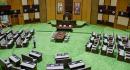
Low sittings, key legislations: 25 years on, three state Assemblies present a mixed record
NEW DELHI: Twenty-five years after they were carved out of Bihar, Madhya Pradesh and Uttar Pradesh, respectively, the Legislative Assemblies of Jharkhand, Chhattisgarh and Uttarakhand have entered a milestone year with a troubling record: some of the lowest numbers of sitting days in the country. Data compiled since their formation in 2000 shows that Chhattisgarhs Assembly met for an average of just 29 days a year, while Jharkhand averaged only 23 sitting days, among the lowest for any State legislature in India. Uttarakhands records remain incomplete for long stretches, including the years 20002015 and 2025, making long-term assessment difficult. These figures fall far short of the recommended national benchmark of 60 sitting days for State legislatures, raising concerns about legislative scrutiny and democratic engagement. The challenges extend beyond sitting days. In all three State Assemblies, the post of Deputy Speaker remained vacant for prolonged periods, signalling what legislators describe as institutional neglect and a weakening of bipartisan norms. Jharkhand has gone over 20 years without a Deputy Speaker, an absence that many members believe undermines legislative balance and accountability. Despite these structural gaps, some States have taken important legislative steps worth emulating. Chhattisgarh, which has 21% women MLAs, one of the strongest representations in the country enacted notable laws in its early years. A 2002 law that enabled private universities to be created through simple notification resulted in over 100 universities being established, but critics point out that many existed only on paper. The Supreme Court struck it down in 2004, flagging serious quality concerns. A decade later, Chhattisgarh passed its own Food Security Act (2012), which became a reference point and model for the national legislation enacted in 2013. Jharkhand was among the first States to introduce 75% reservation for local candidates in private-sector jobs, a move later mirrored by Andhra Pradesh and Haryana. Courts struck down Haryanas law in 2023, and challenges remain pending in other States. Uttarakhand, meanwhile, passed the Uniform Civil Code (UCC) in 2024, becoming the first State to implement it. Supporters hailed it as a step toward equality, while critics warned that it risked disrupting social equilibrium and overlooking community practices. Legislators across the three States agree that democratic functioning demands consistent sittings, procedural stability and open debate. Many acknowledge that confrontational politics, repeated adjournments and legislative delays have eroded the Assemblys core responsibilities. As the three States complete 25 years, expectations from State legislatures are rising. Citizens increasingly demand more time spent in the House, faster decisions on longstanding issues, stronger oversight and dependable forums where public concerns can be voiced and debated. The next quarter-century, lawmakers say, must be defined not by institutional gaps but by a renewed commitment to democratic performance.

 17 C
17 C